Easements in Utah property can affect how you use your land, where you build, and even how you sell your property. Many homeowners first learn about easements when reviewing a land survey, title report, or real estate documents.
Because easements create legal rights for others to use part of your property, understanding how easements in Utah property work helps you avoid surprises before building, buying, or selling land.
What Are Easements in Utah Property?
Easements in Utah property give another party the legal right to use a specific portion of your land for a defined purpose. Although you still own the property, the easement limits how that area can be used.
Most easements remain in place even when ownership changes, which is why they appear on surveys and title documents.
Common Types of Easements in Utah Property
Utility Easements
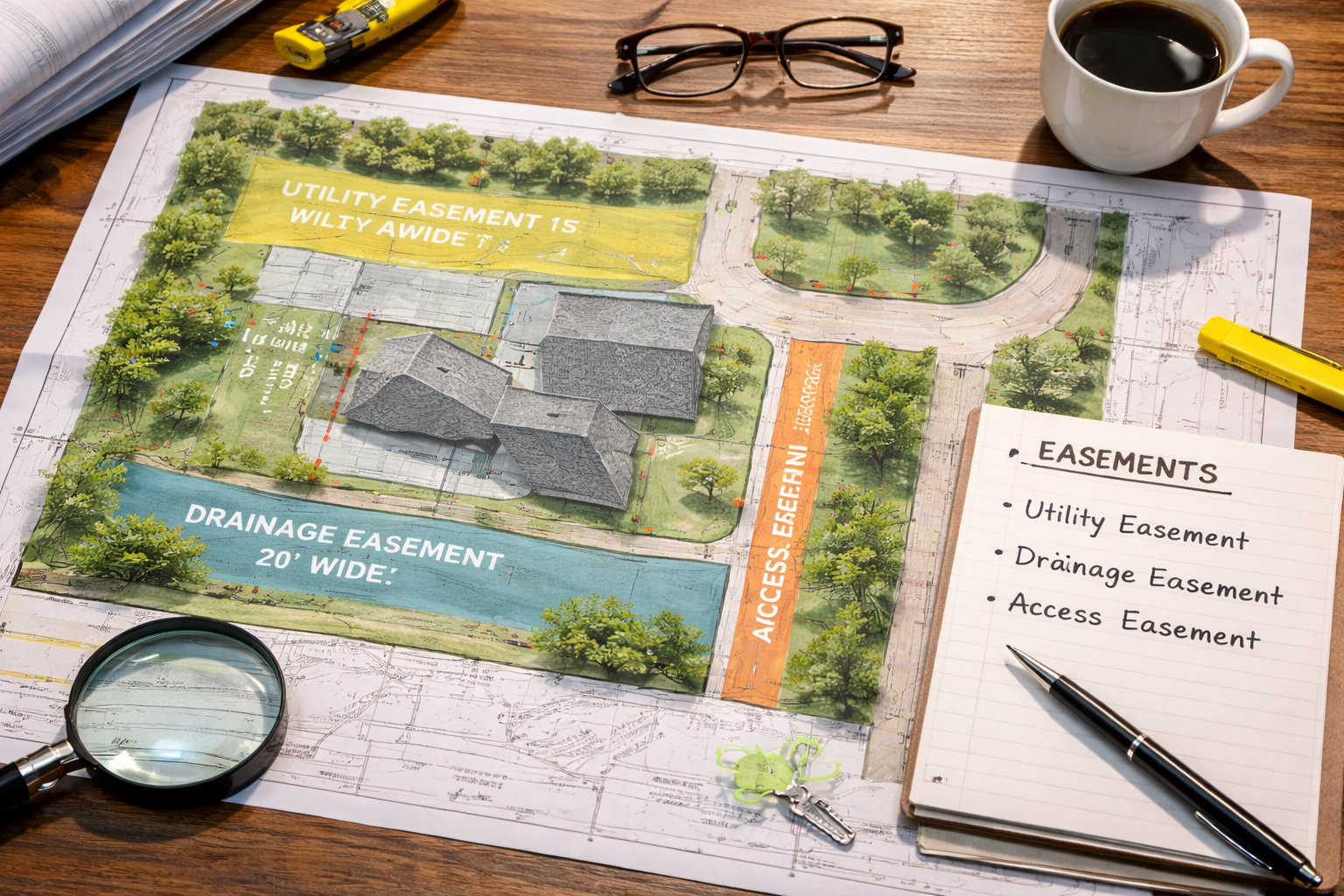
Utility easements allow access for power lines, water lines, sewer systems, and communication infrastructure. These easements often restrict building, excavation, or permanent structures within the easement area.
Access Easements
Access easements allow someone to cross your property to reach another parcel. These commonly serve landlocked properties or shared driveways.
Drainage Easements
Drainage easements control how water flows across land. In Utah’s varied terrain, these easements help prevent flooding, erosion, and drainage disputes.
Conservation Easements
Conservation easements limit development to protect open space or natural features. These often apply to rural, agricultural, or environmentally sensitive land.
How Easements Appear on a Land Survey
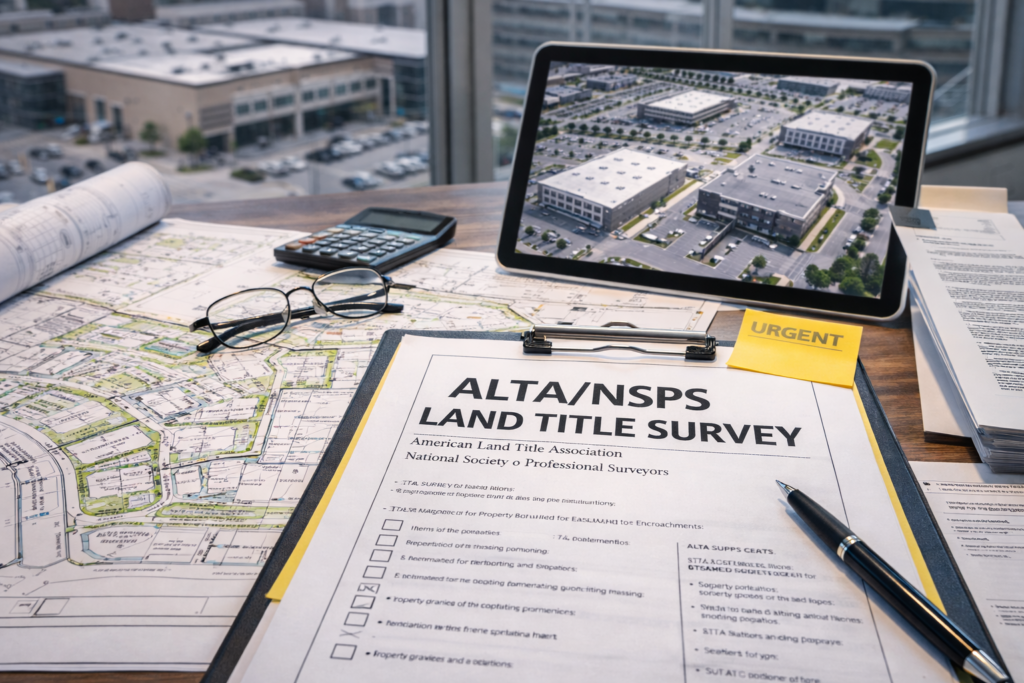
Easements in Utah property usually appear on a land survey as dashed lines, shaded areas, or labeled corridors. Surveyors identify these easements by researching recorded plats, deeds, and legal documents.
Surveyors performing this work must meet licensing and documentation requirements regulated by the Utah Division of Professional Licensing, which provides professional oversight at https://dopl.utah.gov.
Because easements directly affect land use, accurate surveying plays a critical role.
How Easements in Utah Property Affect Building and Fencing
Easements often limit what you can build or place on your land.
For example:
- Structures are usually not allowed within utility easements
- Fences may require approval near access easements
- Landscaping may be restricted in drainage corridors
Ignoring easement restrictions can lead to removal orders or costly changes later.
Can Easements in Utah Property Be Removed?
In some situations, easements can be modified or removed. However, removal typically requires agreement from all parties involved and updated legal documentation.
Because easements serve specific purposes, removal is not always possible or practical.
Why Easements Matter When Buying or Selling Property
Easements in Utah property can affect property value, usability, and future plans. Buyers, lenders, and title companies review easements carefully before closing.
Survey standards used to document easements follow national guidelines outlined by organizations such as the American Congress on Surveying and Mapping, which provides professional resources at https://www.acsm.net.
Understanding easements early helps prevent delays during real estate transactions.
How to Find Easements on Your Property
The most reliable way to identify easements in Utah property is through a professional land survey. A survey clearly shows recorded easements and explains how they affect the land.
Frequently Asked Questions About Easements in Utah Property
Do easements mean I do not own my land?
No. You still own the land, but another party has limited use rights.
Can I build over an easement?
In most cases, no. Building over an easement usually violates its terms.
Do easements expire?
Some easements expire, but many remain permanent unless legally removed.
Are easements always visible?
Not always. Surveys provide the most reliable confirmation.
Do most properties have easements?
Yes. Many developed properties include at least one easement.
Conclusion: Understanding Easements in Utah Property
Easements in Utah property play an important role in land ownership and land use. While easements do not remove ownership, they can limit how parts of your property are used.
Understanding easements before building, buying, or selling helps protect your plans and your investment.ictions.