So you’re asking: how do I become a surveyor in Utah? It’s a great question, and an even better career move. Land surveyors are in high demand across Utah as the state continues to grow with new homes, commercial developments, and infrastructure projects stretching from St. George all the way up to Salt Lake City.
If you enjoy working outdoors, solving problems, and working with precise measurements, surveying could be the perfect fit. This guide walks you through exactly what it takes to become a licensed land surveyor in Utah, step by step.
What Does a Land Surveyor Do?
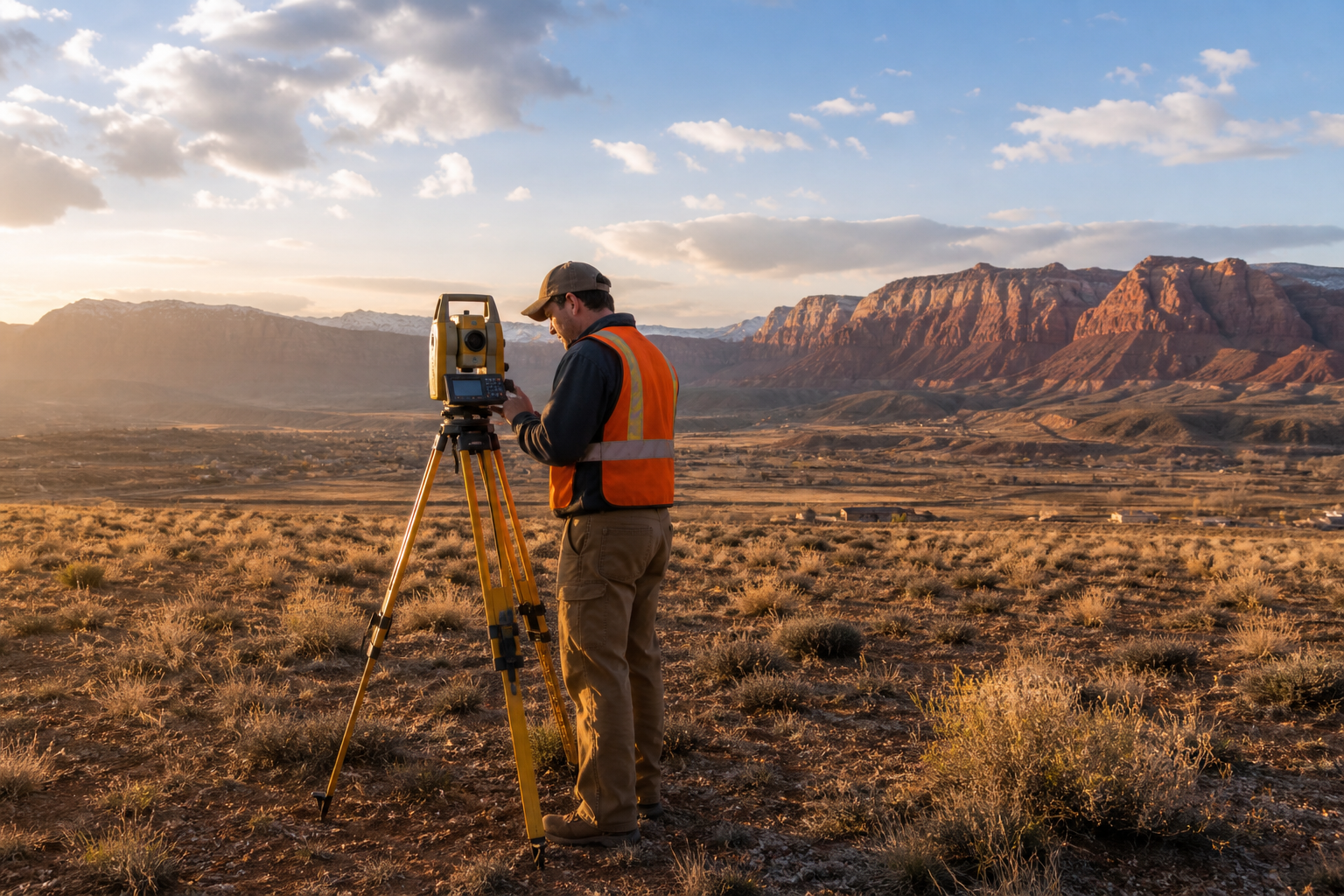
Before jumping into the steps, it helps to understand what the job actually involves. A land surveyor measures and maps the earth’s surface. They determine property boundaries, support construction projects, assist with legal disputes, and help guide development planning.
In Utah specifically, surveyors work on a wide range of projects, including:
- Residential property boundary surveys for homeowners and developers
- Topographic surveys across Utah’s varied terrain, from mountain foothills to high desert
- Pipeline and utility corridor surveys for the oil and gas industry
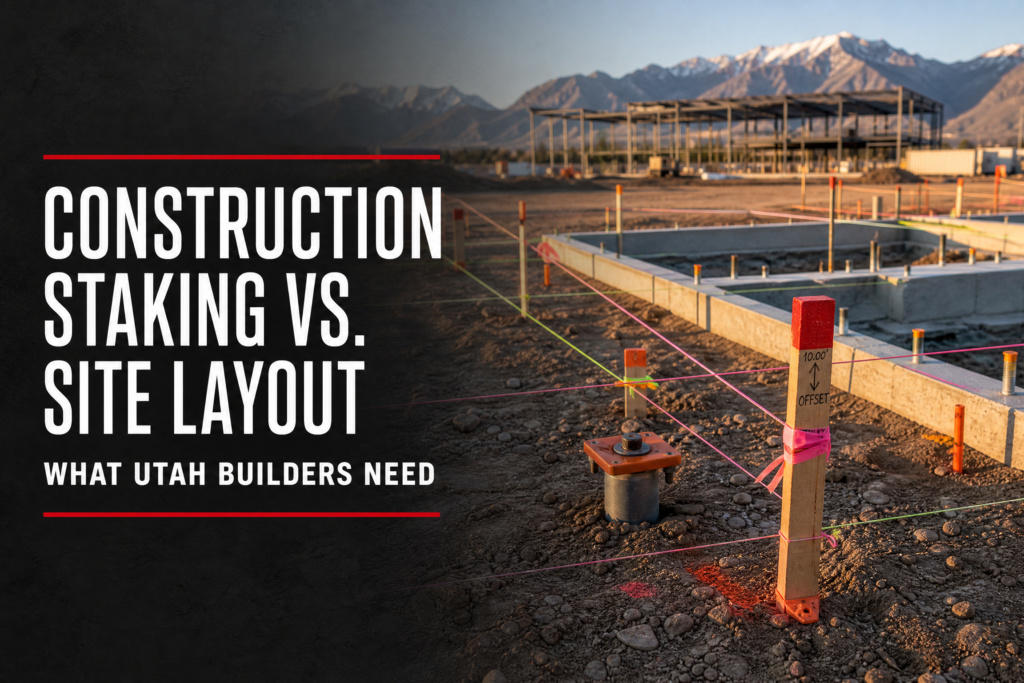
- Construction staking for new buildings and roads
- Legal boundary disputes between neighboring property owners
It’s a career that blends field work, technology, legal knowledge, and problem-solving — which makes it both challenging and rewarding.
Step-by-Step: How to Become a Licensed Surveyor in Utah
Utah’s licensing process is managed by the Utah Division of Occupational and Professional Licensing (DOPL). Here’s how it works.
Step 1: Earn a Relevant Degree
Most aspiring surveyors start with a bachelor’s degree in surveying, geomatics, civil engineering, or a closely related field. Programs typically cover mathematics, GPS technology, GIS mapping, geodesy, and land law.
Useful degree options include:
- Bachelor of Science in Surveying or Geomatics Engineering
- Bachelor of Science in Civil Engineering with a surveying focus
- Associate degree programs combined with qualifying work experience
A degree significantly speeds up the path to licensure compared to relying on work experience alone.
Step 2: Pass the Fundamentals of Surveying (FS) Exam
The first major milestone is the Fundamentals of Surveying (FS) exam, administered by the National Council of Examiners for Engineering and Surveying (NCEES). You can typically sit for this exam in your final year of school or shortly after graduation.
The FS exam covers:
- Mathematics and measurement
- Surveying principles and methods
- Property law and boundary determination
- GPS and technology-based surveying
- Map projections and coordinate systems
Passing this exam earns you the title of Surveyor Intern (SI) in Utah.
Step 3: Gain Supervised Work Experience
After passing the FS exam, you need to work under the supervision of a licensed Professional Land Surveyor (PLS). Utah requires a minimum of four years of progressive, supervised experience before you can sit for the final licensing exam.
During this time, aim to gain hands-on experience in:
- Boundary surveys and property line determination
- Topographic and construction surveys
- Reading legal descriptions and historical records
- Operating equipment like total stations, GPS, and drones
- Preparing and reviewing plats and survey maps
Step 4: Pass the Principles and Practice of Surveying (PS) Exam
Once your experience requirement is met, you sit for the Principles and Practice of Surveying (PS) exam — also from NCEES. This is the final national exam before applying for your Utah license.
The PS exam is more advanced and focuses on the practical application of surveying knowledge, including state-specific legal concepts. Most candidates study for several months before sitting for it.
Step 5: Apply for Your Utah PLS License
After passing both exams, you apply for your Professional Land Surveyor (PLS) license through Utah DOPL. You’ll submit proof of education, experience logs, exam scores, and professional references.
Application requirements typically include:
- Completed application and fee payment
- Verified proof of education
- Experience record signed by your supervising PLS
- Passing NCEES FS and PS exam scores
- Professional references from licensed surveyors
How Long Does It Take to Become a Surveyor in Utah?
The timeline depends on your education path, but here’s a realistic estimate:
- 4 years — Bachelor’s degree in surveying or related field
- 6 to 12 months — Preparing for and passing the FS exam
- 4 years — Supervised work experience as a Surveyor Intern
- 3 to 6 months — Preparing for and passing the PS exam
- 1 to 3 months — Application processing through DOPL
Most people take between 8 and 10 years from starting college to receiving their PLS license.
Why Utah Is a Great Place to Build a Surveying Career
Utah’s rapid population growth makes it one of the best states to pursue a surveying career. Cities like Salt Lake City, Provo, St. George, and Cedar City are expanding fast, and that means steady demand for licensed surveyors.
Utah surveyors work across a wide range of projects, including:
- Residential subdivision development
- Commercial real estate and retail projects
- Oil, gas, and pipeline work across eastern Utah
- State and federal land boundary surveys in rural areas
- Highway and transportation projects
Utah’s unique terrain — mountains, valleys, and high desert — also means surveyors here develop versatile field skills valued across the entire region.
If you want to see the kind of work experienced Utah surveyors take on, check out our Understanding the Different Types of Land Surveys in Utah article to get a better picture of the profession.
Key Takeaways
- Earn a bachelor’s degree in surveying, geomatics, or a related field
- Pass the NCEES Fundamentals of Surveying (FS) exam to become a Surveyor Intern
- Complete four years of supervised experience under a licensed PLS
- Pass the NCEES Principles and Practice of Surveying (PS) exam
- Apply for your PLS license through Utah DOPL
- Stay current with continuing education requirements after licensure
Helpful Resources
- National Society of Professional Surveyors (NSPS) — professional development, advocacy, and exam prep resources for surveyors nationwide
- Utah Association of Land Surveyors (UALS) — Utah-specific networking, continuing education, and licensing guidance
Conclusion
How do you become a surveyor in Utah? It takes education, hands-on experience, and passing two national exams. The path requires commitment, but the result is a stable, in-demand career in one of the fastest-growing states in the country.
Whether you’re just starting to explore the field or already working toward your Surveyor Intern status, Utah is an excellent place to build your career. Working alongside experienced professionals at a licensed firm like Cook Surveying & Associates gives you the real-world training that no classroom can fully replace.
Ready to learn more? Contact Cook Surveying & Associates today and speak with our team of licensed professionals.